

South Florida
New Roof Installation Built to Florida Building Code
A bundle of shingles costs the same for everyone. What separates a roof that lasts from one that peels at the edges is the deck under it, the fastening pattern in it, and the metal around every opening in it.
- Deck re-nailed to code
- All-new flashing & boots
- Permits & fees included
Overview
Same shingle, two roofs, completely different outcomes
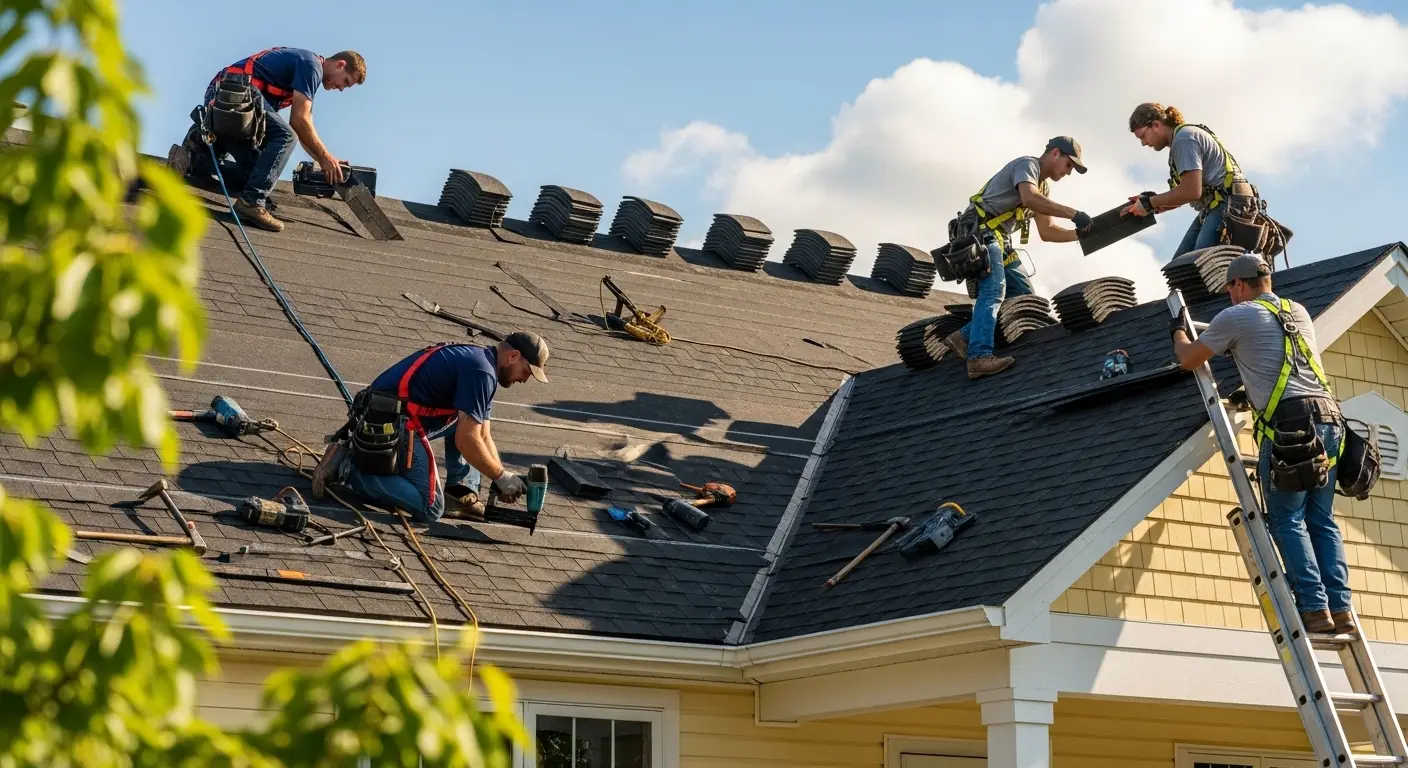
Homeowners shop roofs by material and price, which is reasonable, because that is what appears on the estimate. But when a roof fails early in South Florida, it is rarely the shingle or the tile that failed. It is a starter course skipped at the rake, nails driven high above the nailing strip, a pipe boot that got reused, or a deck that was never re-fastened.
USA Roofing and Construction installs under state roofing license CCC1337306 and building license CBC1266379. That second license matters when the roof is part of something larger, such as a new addition, a rebuilt porch or a garage conversion, because the framing, the sheathing and the covering all stay with one contractor on one permit.
Every job starts with a free on-site measurement and an instant roof report, followed by a written price with permits and permit fees already inside it. Architectural shingle starts at $6.00 per square foot, tile at $10.25 and metal at $10.75, and the price is guaranteed 100% before anyone starts.
Why us
What you get with USA Roofing & Construction
Measured on the roof
A free on-site measurement and an instant roof report, not a number traced off a satellite photo in an office.
Built for uplift
Tighter fastening at eaves, rakes and corners, where wind pressure is highest and where roofs actually start to peel.
Every piece of metal is new
Drip edge, valley metal, wall and chimney flashing, pipe boots. Reusing old flashing under a new roof is a false economy.
Permitted and inspected
We pull the permit under our own license and carry it through the in-progress and final county inspections.
The layers nobody sees are the ones that decide everything
By the time the covering goes down, most of what determines how the roof performs is already buried. On a re-roof there is exactly one morning when the deck is bare and visible, and what gets done that morning cannot be revisited without taking the roof off again.
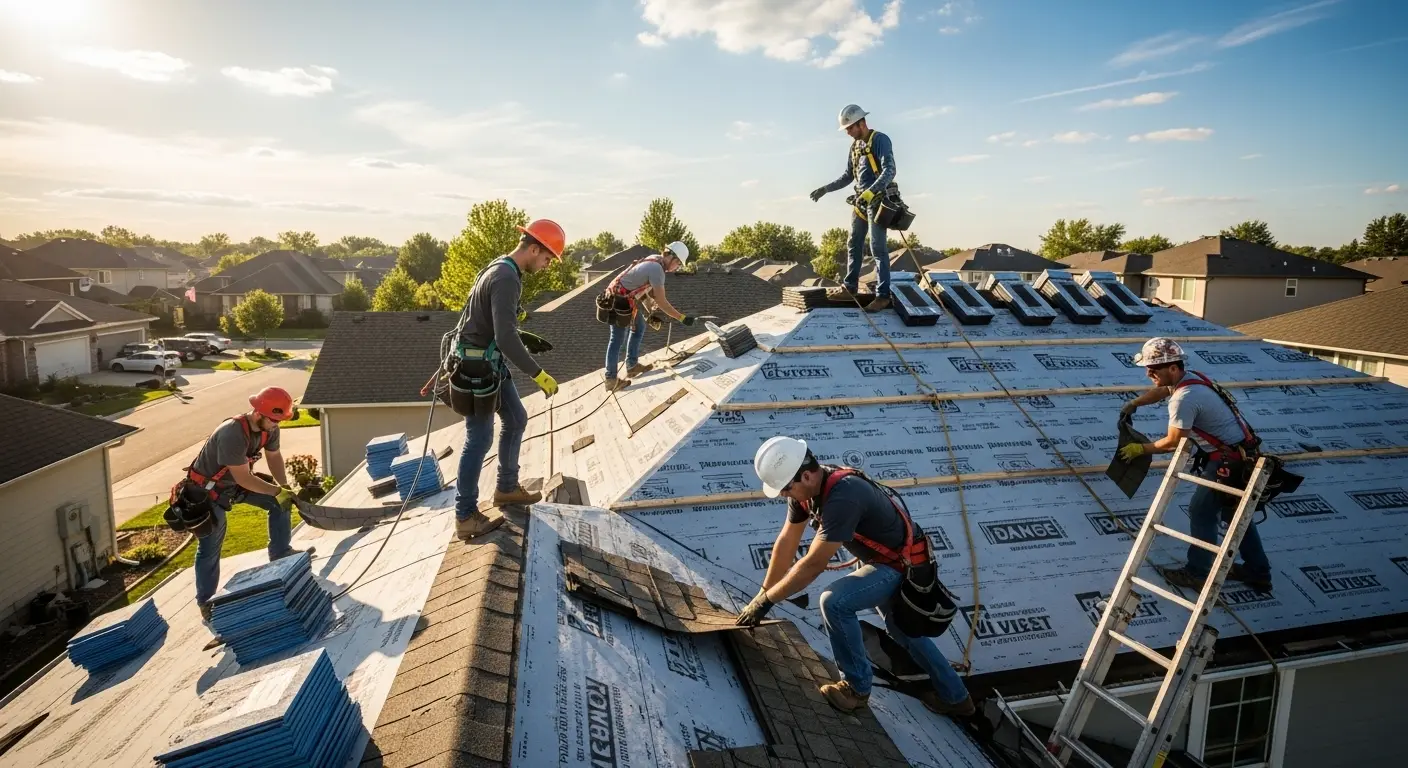
A dry-in done properly keeps water out of the house on its own, before a single shingle or tile is set. That is the standard worth building to, because in a storm the covering can be damaged and the barrier underneath is what is still working.
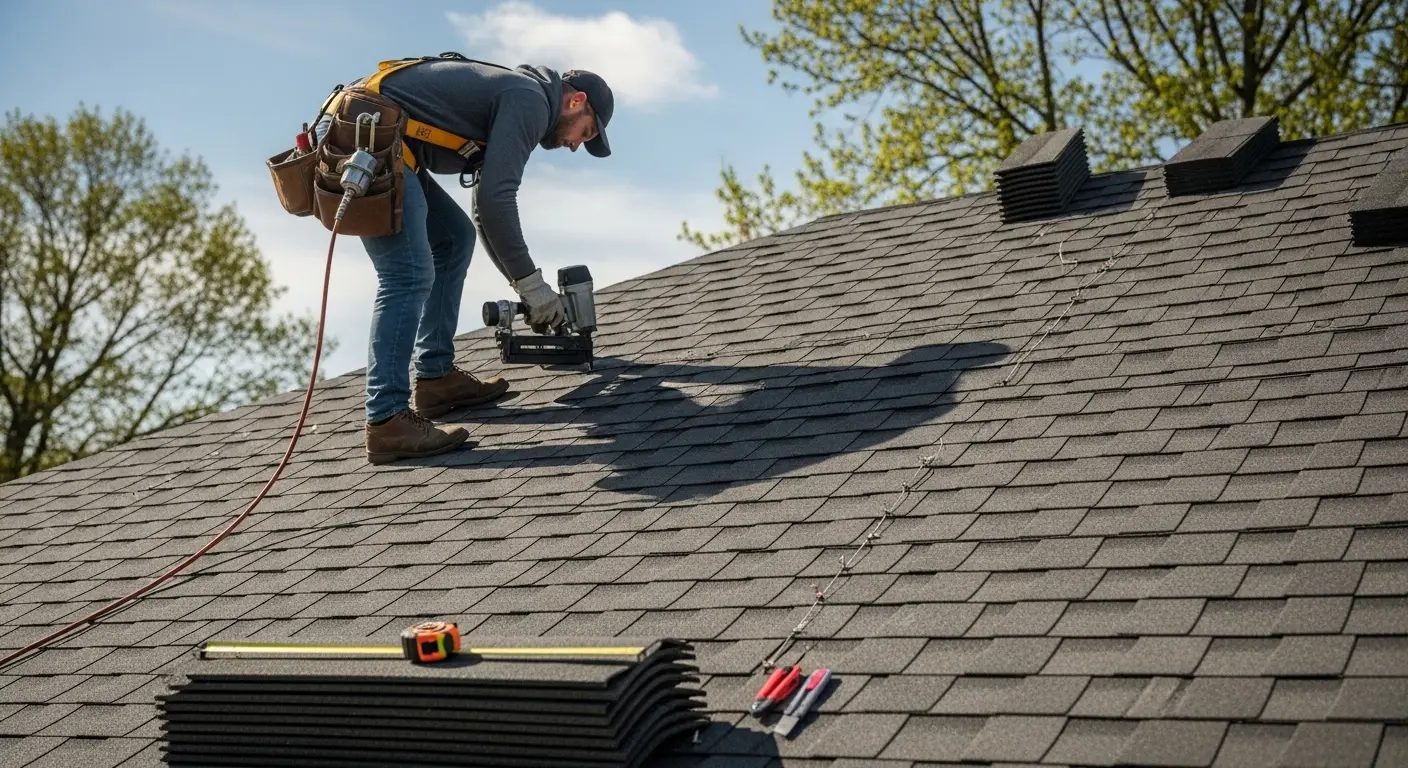
- Deck inspection sheet by sheet. Delaminated, water-stained or sagging plywood gets replaced rather than covered.
- Re-nailing of the existing deck to the current fastening schedule with ring-shank nails. Required on Florida re-roofs, and one of the highest-value things that happens all week.
- Secondary water barrier: a self-adhered membrane or approved assembly bonded to the deck, sealing around each fastener it passes.
- Drip edge in the correct sequence: under the underlayment at the eaves, over it at the rakes, so water is shed instead of wicked back onto the fascia.
- Valleys lined with new metal or a self-adhered valley detail, sized for the volume of water the slopes above actually deliver in a summer downpour.
- Every penetration re-flashed with new material: vents, boots, skylight curbs, A/C stands, and anything else coming through the roof plane.
The details that decide how a roof behaves in a hurricane
Wind does not lift a roof from the middle. It catches an edge, gets underneath, and peels. That is why code treats the perimeter and corners of a roof differently from the field, and why the first few feet in from any edge is where a cheap install shows itself first.
Miami-Dade and Broward sit inside the High Velocity Hurricane Zone, which carries stricter product approval and fastening requirements than the rest of the state. Palm Beach sits outside it but still enforces high-wind provisions. We build to whichever set applies to your address.
- Six nails per shingle in the High Velocity Hurricane Zone, placed in the nailing strip the manufacturer specifies: not high, not angled, not overdriven through the mat.
- Starter strip at the eaves and at the rakes. The rake starter is the one that gets skipped, and the rake is where peeling starts.
- Closer fastener spacing in perimeter and corner zones, because uplift pressure there is a multiple of the pressure over the middle of the roof.
- Corrosion-resistant fasteners. Close to the ocean a cheap fastener gives up long before the covering it is holding down.
- Tile attached by the method its approval calls for (mechanical fasteners, adhesive-set, or a combination), with hip and ridge secured rather than mortared for appearance.
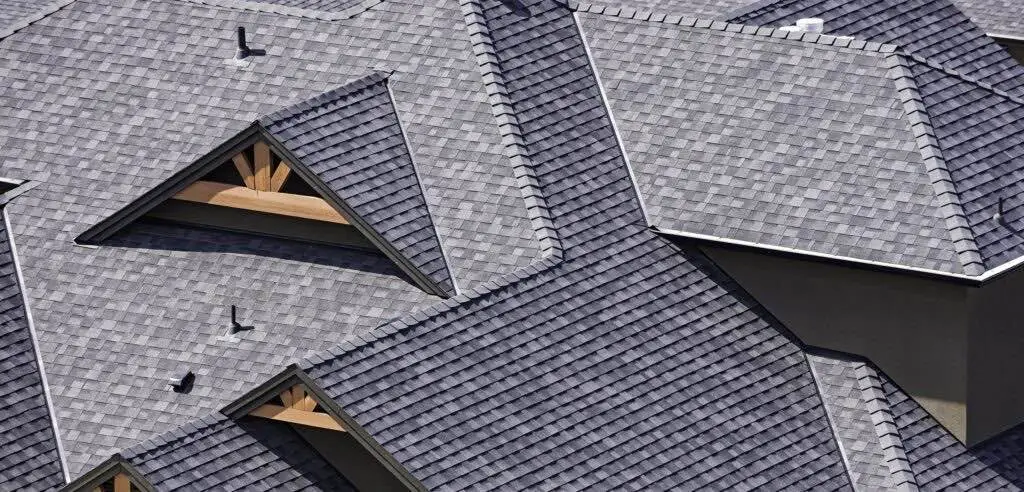
- Hip and ridge components rated for the system, instead of field shingles cut down to fit and nailed across the most exposed line on the roof.
How to spot a cheap install from the ground
You do not have to walk a roof to see corner-cutting. Most of it is visible from the driveway with a phone camera zoomed in, and every item on this list costs money later.
- New shingles laid straight over the old ones. The deck was never inspected and never re-nailed, and nobody knows what is under there.
- Old pipe boots left in place, sometimes with a bead of caulk around the split. Caulk is not flashing and it does not survive UV.
- Rusty drip edge or corroded valley metal sitting under a brand new covering.
- No starter course at the rake, so you can see the cut edges of the first shingles overhanging the gable.
- Wavy, uneven courses across the field, which normally means nobody bothered to snap chalk lines.
- No permit posted on the job and no county inspection at the end. If it was never inspected, nobody checked any of the above.
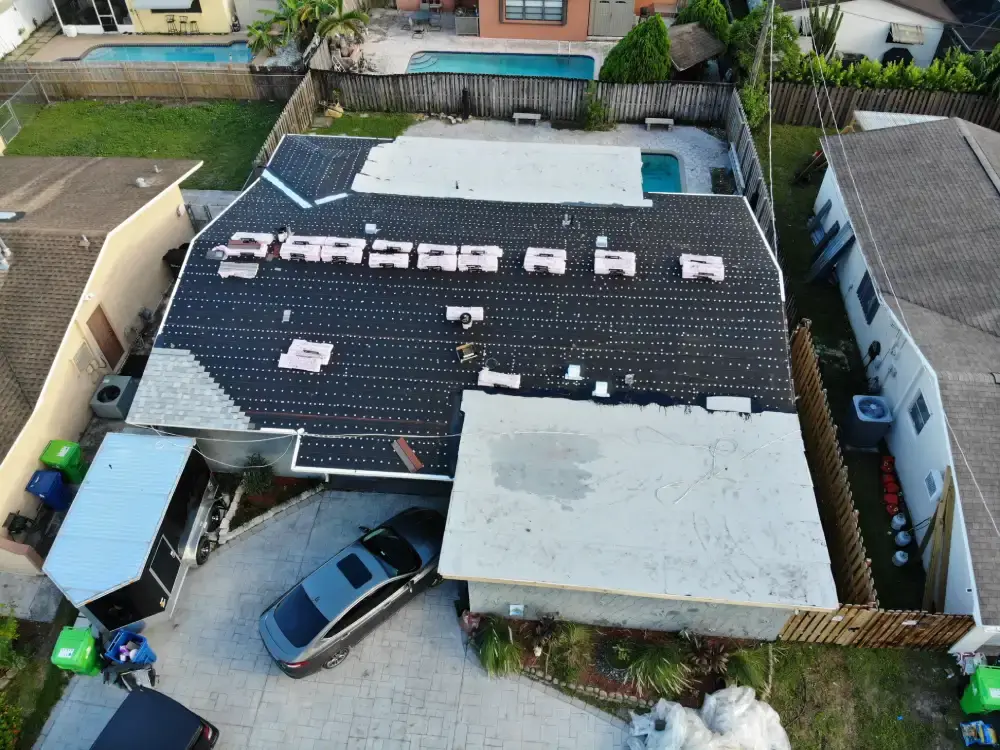
Affordable roof financing
Every home deserves a safe roof, including yours
A roof shouldn’t wait for a perfect credit score. We’re a PACE-approved contractor, so we can put a new roof over your family for as little as $65 a month with nothing down.
- No credit check required
- $0 down with 100% financing
- PACE program approved contractor
- Secured & unsecured financing
- 10, 20 and 30 year terms
- No pre-payment penalty
*Payment example based on approved credit and project size. Terms vary; ask us for the exact numbers on your roof.
Questions
Roof Installation — straight answers
What is the difference between roof installation and roof replacement?
Replacement means removing an existing roof and building a new one in its place. Installation covers that plus roofs going onto something that never had one: a new addition, a rebuilt porch, a garage conversion, new construction. We hold both a roofing license and a building license, so framing, sheathing and the finished covering can all run under one contractor and one permit.
How many nails go into each shingle in South Florida?
In the High Velocity Hurricane Zone, which covers Miami-Dade and Broward counties, asphalt shingles are applied with six fasteners each. Placement matters as much as the count: nails go in the nailing strip the manufacturer specifies, driven flush rather than overdriven through the mat, and never above the strip where they miss the course underneath. Palm Beach follows the state high-wind provisions.
Does the deck have to be re-nailed if the plywood is in good shape?
Yes. Florida requires existing decking to be re-fastened to the current schedule when the roof covering is replaced, no matter how sound the plywood looks. Older homes were often sheathed with smooth-shank nails at wide spacing, which is exactly what allows a deck to lift in high wind. Re-nailing is inexpensive while the roof is open and impossible once the new system is on.
What underlayment do you install?
It depends on the covering and the slope. Most re-roofs here get a self-adhered secondary water barrier bonded directly to the deck, because it seals around fasteners and keeps water out even if the covering above is damaged in a storm. Tile systems and low-slope sections use different approved assemblies. Whatever goes on your roof is named in the written scope, not just called underlayment.
Do I need a permit, and who pulls it?
We do, under our own state license, and the permit fee is already inside the quoted price. You will not visit a building department or receive a separate permit invoice. Your city or county inspects the work in progress, typically at dry-in, and again at completion. An unpermitted roof creates problems at resale and with insurance, so it is not a corner worth cutting.
Can you install a roof on a new addition or new construction?
Yes. The building license covers structure and the roofing license covers the covering, so framing, sheathing, the tie-in to the existing roof and the finished system all run on one schedule with one contractor responsible. Additions leak most often right at that tie-in, where new work meets old, which is exactly why it helps to have one crew answerable for both sides of the seam.
Reviews
Homeowners who trusted us with the job
5.0 out of 5 · verified Google reviews
I can't say enough about the professionalism and quality of work USA Roofing & Construction delivered! Eli and Max were there with me every step of they way. They replaced my front door, garage door and skylight. Communication was excellent. Service was outstanding. Everything was done in a timely fashion. I highly recommend them and will use their services again in the future. Thank you for making my construction issues easy! Love my front door and so does Buddy!
USA Roofing and Construction's commitment to excellence is evident in every aspect of their business, from the initial consultation to the final inspection. USA Roofing and Construction's team is a well-oiled machine, working seamlessly together to deliver exceptional results and exceed customer expectations.
Delivered as promised on budget. I would recommend them and use them again!
Keep exploring
Related services
Service area
Local crews across South Florida
We travel all around South Florida, from Miami-Dade to Palm Beach County. Pick your city to see local roofing information, or just call and we’ll tell you if we cover your street.
Free estimate
Ready for a roof installation quote?
Free inspection, instant roof report, written estimate and financing options, all with no obligation. Tell us what’s going on and we’ll take it from there.
- Call or text954-893-2550
- Email ususaroofingac@gmail.com
- Visit us1118 N 46 Terrace, Hollywood, FL 33021
- State licensesCCC1337306 · CBC1266379
Request a free estimate
We reply the same business day.
Thank you — we've got it.
A member of our team will reach out shortly. Need it handled right now? Call954-893-2550.