

South Florida
Flat and Low-Slope Roofing in South Florida
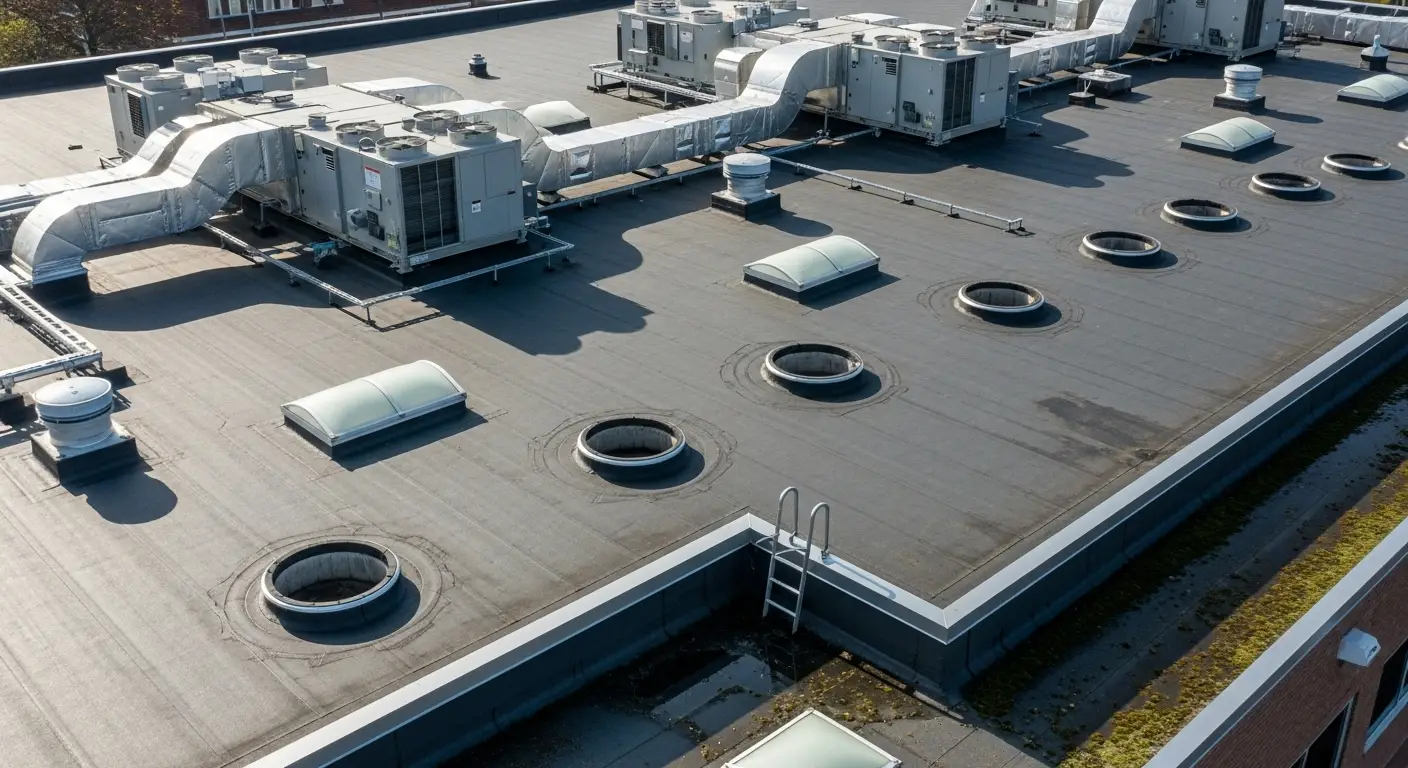
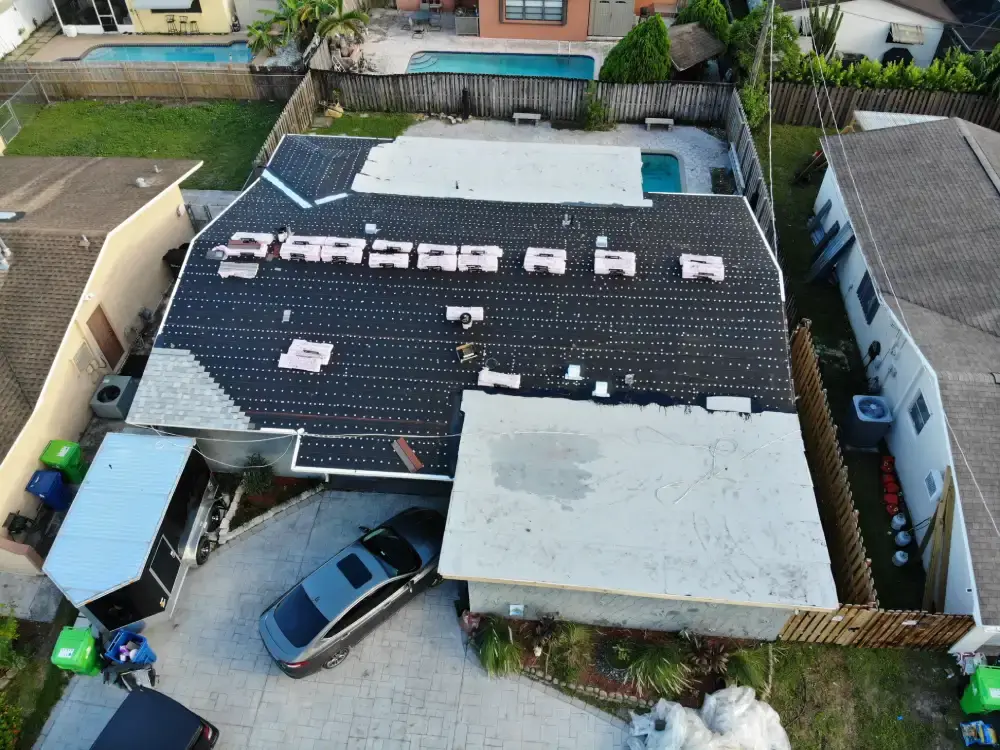
Flat roofs do not fail because they are flat. They fail because water sits on them, and here it sits on them for months at a time. We design low-slope roofs around drainage first and choose the membrane second.
- Mod-bit, TPO & self-adhered
- Permits & fees included
- Free instant roof report
Overview
Low slope is a different trade
Anything under about a 2:12 pitch is low slope, and shingles and tile are not permitted there for a simple reason: they shed water, they do not hold it back. Below that pitch water moves slowly, backs up behind anything in its way and sits in wind-driven rain. The roof has to be a continuous waterproof membrane instead of a series of overlapping pieces.
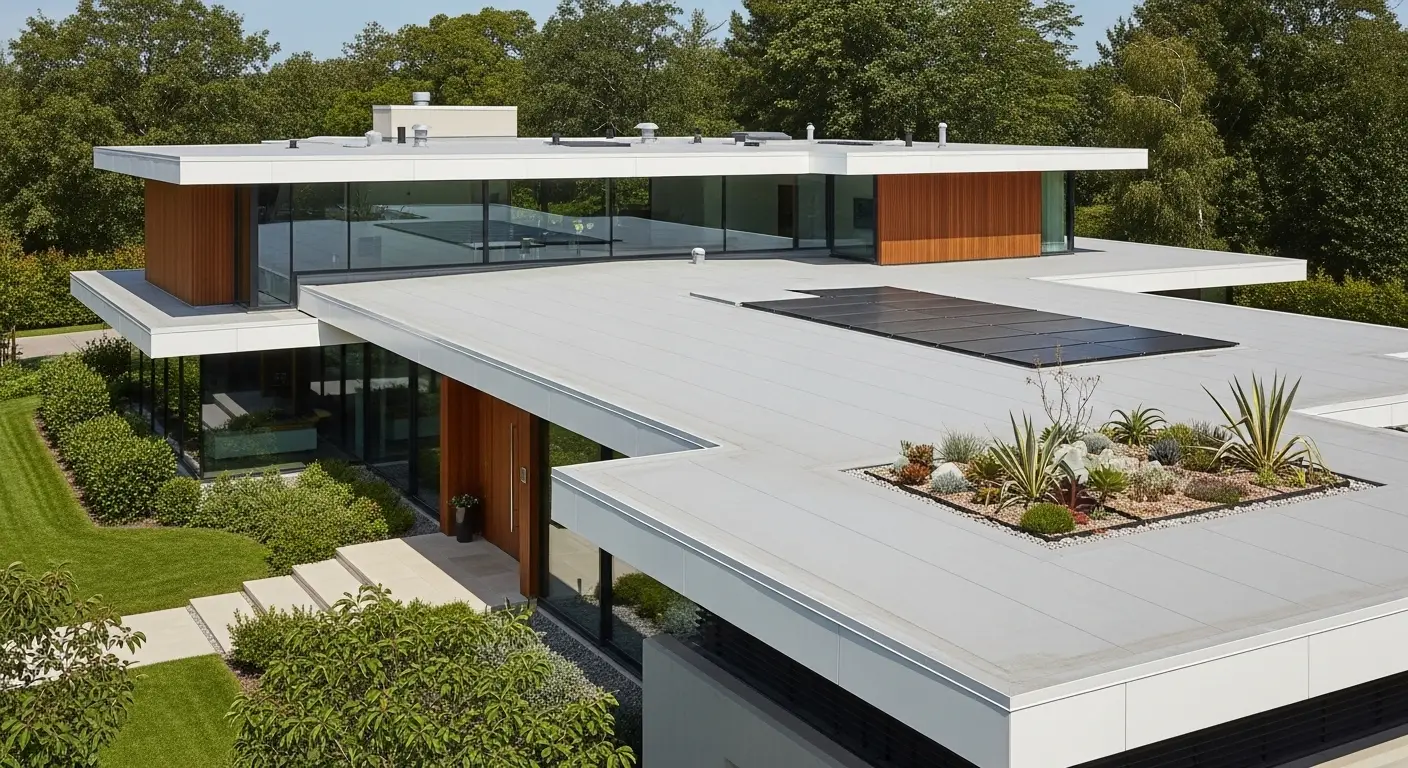
In South Florida that covers a lot of buildings: mid-century flat-roofed homes, the Florida room or garage addition on the back of a ranch house, apartment and condo buildings, warehouses, strip retail and just about every commercial building with rooftop equipment on it.
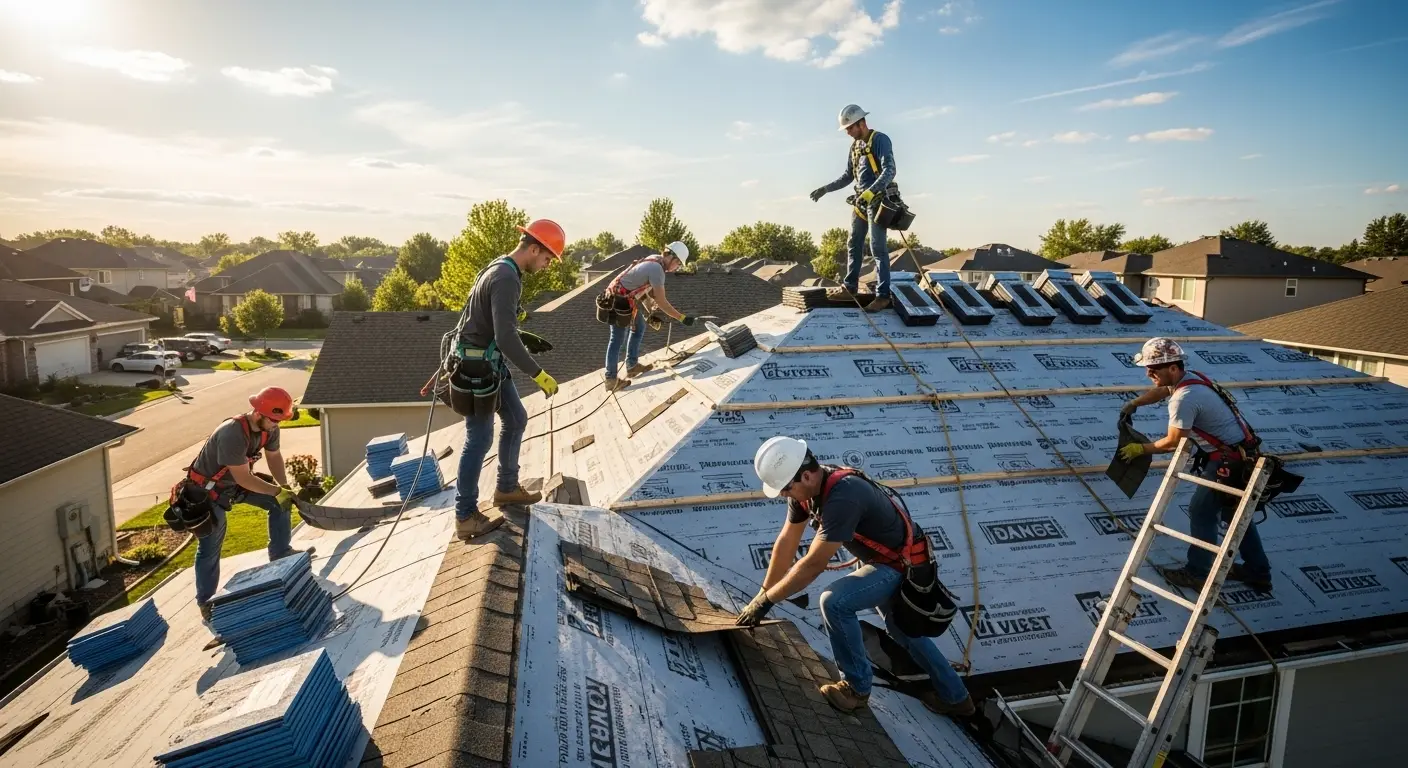
USA Roofing and Construction installs and repairs modified bitumen, TPO and self-adhered low-slope systems across Broward, Miami-Dade and Palm Beach under licenses CCC1337306 and CBC1266379. We pull the permits, permit fees are inside the quoted price, and there are no commissioned salespeople adding a margin to your number.
Why us
What you get with USA Roofing & Construction
Drainage designed before membrane
We work out where water leaves the roof before we price a system: tapered build-ups, crickets and scuppers where the existing deck cannot do it alone.
The seam is the roof
Heat-welded TPO laps and torched or self-adhered modified bitumen seams. On low slope, a seam that is merely sealed is a leak with a start date.
Florida rooms and additions
Most residential flat-roof leaks we are called to are on a room added later. We rebuild the tie-in as part of the job, not as a change order.
Permitted and inspected
Roofing license CCC1337306 and building license CBC1266379. Permits and fees are inside the quoted price and we carry the job through final inspection.
The low-slope systems we install, and where each one belongs
There is no single best flat roof. There is a best roof for your deck, your slope, your rooftop traffic and what is going to be sitting on it. These are the systems we build and the honest case for each.
- Modified bitumen, two-ply, uses a base sheet plus a granulated cap sheet. The toughest system underfoot, forgiving of rooftop traffic and equipment service, and the easiest to patch cleanly years later. Our default on residential low slope.
- Self-adhered modified bitumen is a peel-and-stick base and cap with no open flame on the roof. Common on plywood-decked homes and where a torch is the wrong tool near soffits, walls or landscaping.
- Torch-applied and hot-mopped mod-bit is still the right answer over concrete decks and on larger commercial fields where the crew has room to work safely.
- TPO single-ply is a white, heat-welded membrane, mechanically attached or fully adhered. The best reflectivity of the group and the usual choice on commercial buildings and larger flat areas.
- PVC covers the case where kitchen exhaust, grease or chemical discharge would attack a TPO or asphalt surface: restaurants and food processing, mostly.
- Coatings, silicone or acrylic over a sound, dry roof, are a legitimate way to buy years. Over a wet roof they are a way to hide the problem until it costs more.
Ponding water is what actually kills a flat roof
If water is still standing on your roof forty-eight hours after the rain stops, that is ponding, and it is not cosmetic. Every inch of standing water adds roughly five pounds per square foot of dead load to a structure that was designed to shed it, not hold it.
Ponding also concentrates everything that degrades a membrane. Heat, UV reflecting off the surface, algae, silt that holds moisture against the cap sheet, and constant hydrostatic pressure hunting for the one lap that was not fully bonded. A roof that drains will outlive an identical roof that ponds by years.
- Minimum design slope for most low-slope systems is a quarter inch per foot. Older South Florida buildings were frequently built flatter than that, or have settled since.
- Tapered insulation or a tapered build-up creates fall where the structure cannot, and crickets behind curbs, chimneys and walls push water around obstructions rather than into them.
- Drains get reset at the low point with new clamping rings and lead or membrane flashing, not sealed around with mastic.
- Through-wall scuppers and conductor heads move water off roofs with parapets, and code requires secondary overflow so a blocked primary drain does not turn the roof into a pool.
- Clogged drains, scuppers and gutters are the single cheapest failure to prevent. Clear them before hurricane season and after it.
- Standing water that never dries is a warning about the deck below it. We probe for soft, saturated insulation before quoting a recover.
Where flat meets sloped: the joint everybody leaks at
The most common low-slope leak in South Florida is not in the middle of the field. It is at the wall where a Florida room, a screened-porch conversion or a garage addition ties into the main house, and it usually leaks because the original builder ran the membrane up to the wall and troweled tar over the joint.
That joint has to be built, not sealed. Every layer must direct water onto the top of the layer below it, with no reliance on any sealant to be the waterproofing.
- Membrane turned up the vertical wall to a proper height and terminated with a bar and sealant, so the water plane is continuous around the corner.
- Counterflashing let into the wall, under the stucco or behind the siding, lapping over the membrane termination instead of butting against it.
- The sloped roof above lapped over the low-slope system, never the other way around.
- AC stands, skylights, hatches and vent penetrations raised on flashed curbs rather than bedded flat into the field.
- Parapets treated as part of the roof: membrane up the back side, cap flashing over the top, and the coping joints detailed for movement.
- Screen enclosures and porch conversions checked at the beam and header, where the original structure was never built as a conditioned roof.
Affordable roof financing
Every home deserves a safe roof, including yours
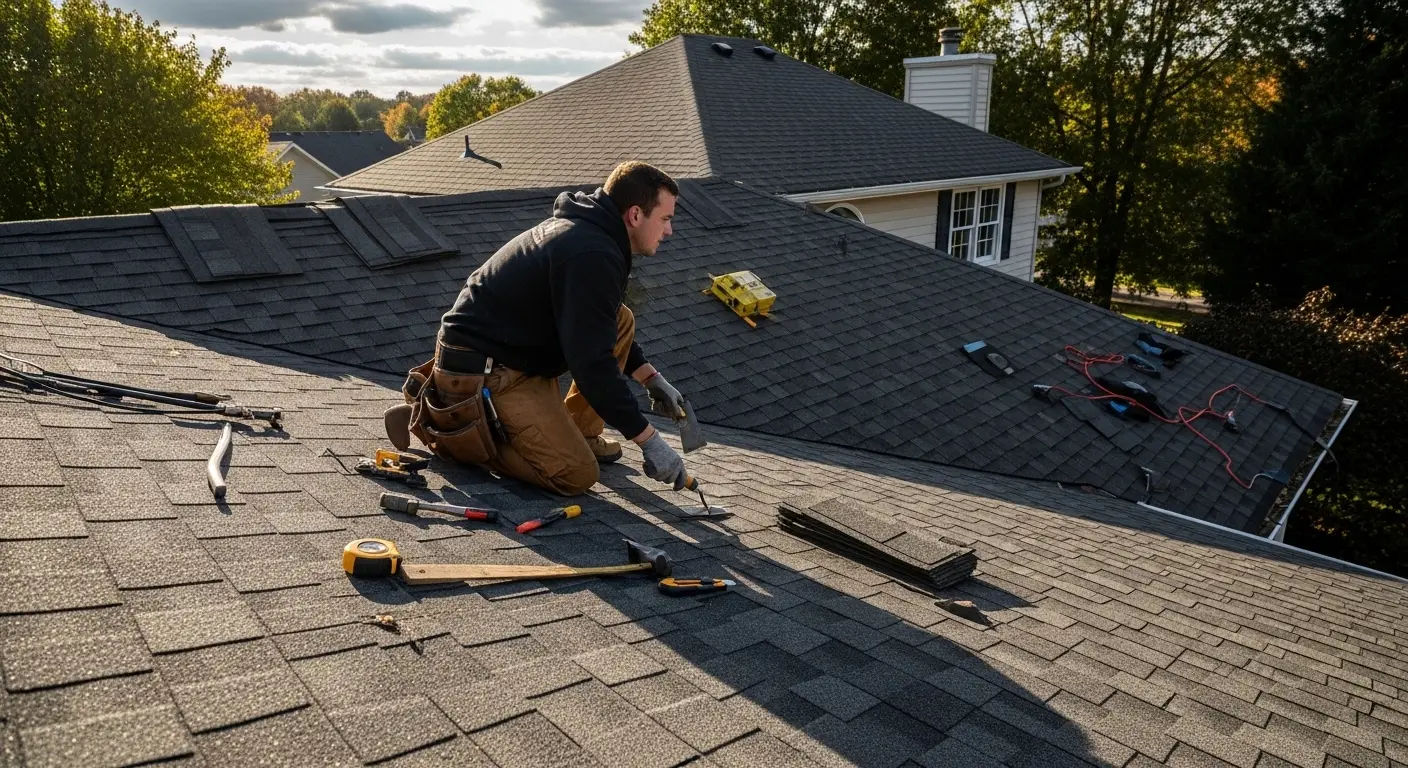
A roof shouldn’t wait for a perfect credit score. We’re a PACE-approved contractor, so we can put a new roof over your family for as little as $65 a month with nothing down.
- No credit check required
- $0 down with 100% financing
- PACE program approved contractor
- Secured & unsecured financing
- 10, 20 and 30 year terms
- No pre-payment penalty
*Payment example based on approved credit and project size. Terms vary; ask us for the exact numbers on your roof.
Questions
Flat Roofing — straight answers
How long does a flat roof last in South Florida?
A two-ply modified bitumen roof generally gives 15 to 20 years here, and a well-installed TPO system runs a similar range with better reflectivity. Drainage is the variable that separates the good outcomes from the short ones. A roof that ponds after every storm will disappoint you years earlier than an identical roof that empties itself in a couple of hours.
Is a flat roof actually flat?
No, and it should not be. Low-slope roofs are built with fall toward drains or scuppers, usually a minimum of a quarter inch per foot. What looks flat from the ground is pitched enough to empty. Where an existing structure is truly dead level or has sagged, we add tapered insulation or a tapered build-up to create the fall the original construction never had.
Why does my Florida room leak where it meets the house?
Almost always because the membrane was run up to the wall and the joint was sealed with mastic rather than flashed. Sealant fails, the wall moves, and water tracks in behind the stucco. The fix is to turn the membrane up the wall, terminate it properly and install counterflashing that laps over that termination. We rebuild the tie-in as part of the re-roof.
Should I choose TPO or modified bitumen?
TPO is white, reflective and heat-welded, so it is cooler and it suits large commercial fields well. Modified bitumen is tougher underfoot, handles rooftop traffic and equipment service better and is simpler to patch years down the line. On residential low slope and roofs with a lot of penetrations we usually lean modified bitumen. On big open commercial decks, TPO.
Can you just coat my flat roof instead of replacing it?
Sometimes. A silicone or acrylic coating over a sound, dry, well-drained roof is a genuine way to add years for a fraction of a replacement. It is not a repair for a roof with wet insulation, failed laps or ponding, because you are then sealing moisture inside the assembly. We probe the roof and tell you which one you have before quoting either.
Do you work on commercial buildings as well as homes?
Yes. We hold both a state roofing license, CCC1337306, and a state building license, CBC1266379, and we work across Broward, Miami-Dade and Palm Beach on apartment and condo buildings, warehouses, retail and offices as well as houses. Commercial low-slope work brings rooftop equipment, curbs, drains and phased scheduling, all of which is written into the estimate up front.
Reviews
Homeowners who trusted us with the job
5.0 out of 5 · verified Google reviews
I can't say enough about the professionalism and quality of work USA Roofing & Construction delivered! Eli and Max were there with me every step of they way. They replaced my front door, garage door and skylight. Communication was excellent. Service was outstanding. Everything was done in a timely fashion. I highly recommend them and will use their services again in the future. Thank you for making my construction issues easy! Love my front door and so does Buddy!
USA Roofing and Construction's commitment to excellence is evident in every aspect of their business, from the initial consultation to the final inspection. USA Roofing and Construction's team is a well-oiled machine, working seamlessly together to deliver exceptional results and exceed customer expectations.
Delivered as promised on budget. I would recommend them and use them again!
Keep exploring
Related services
Service area
Local crews across South Florida
We travel all around South Florida, from Miami-Dade to Palm Beach County. Pick your city to see local roofing information, or just call and we’ll tell you if we cover your street.
Free estimate
Ready for a flat roofing quote?
Free inspection, instant roof report, written estimate and financing options, all with no obligation. Tell us what’s going on and we’ll take it from there.
- Call or text954-893-2550
- Email ususaroofingac@gmail.com
- Visit us1118 N 46 Terrace, Hollywood, FL 33021
- State licensesCCC1337306 · CBC1266379
Request a free estimate
We reply the same business day.
Thank you — we've got it.
A member of our team will reach out shortly. Need it handled right now? Call954-893-2550.